

Applied research · Lille, France
Quantitative research & microstructure.
Seer’s Sage brings together econophysics, deep learning on limit order books, and execution engineering. We design, test, and deploy systems for direct market access (DMA) and risk management across global liquid markets.
- Asset classes
- 8+
- Liquid instruments
- 500+
- Nanosecond tick data
- 19.4 PB
- FPGA tick-to-trade
- < 820 ns
- Production systems
- 24/7

The infrastructure · in production
The laboratory never sleeps.
Every tick that enters is timestamped, indexed and made queryable in under a second. GPU training and C++23 execution share the same racks, the same clock discipline and the same 19.4 PB of history.
- Ticks archived
- 19.4 PB
- Tick → order, end to end
- 820 ns
- Continuous capture and execution
- 24 / 7
Market coverage
Eight liquid asset classes
Our research infrastructure observes markets at microsecond resolution and reconstructs order books one event at a time. It spans equity and derivatives exchanges, electronic FX venues, physical commodity markets, and weather derivatives.
Equities & Microstructure
80+ VenuesUS Exchanges, Euronext, LSE, TSE, HKEX. Full L1/L2/L3 market feeds with hardware nanosecond timestamping, adverse selection profiling, and econometric TCA decomposition.
Sovereign Rates & Credit
G10 & EMStochastic term structure dynamics (Nelson-Siegel-Svensson, HJM), cash liquidity tracking, and systematic inter-curve relative value arbitrage versus interest rate derivatives.
Foreign Exchange (G10 & NDF)
Spot / SwapsOrder flow toxicity modeling across ECNs (EBS, Currenex, FastMatch), bilateral queue imbalance, Last Look reject microstructure, and non-linear smart order routing.
Rate Derivatives & Swaps
Listed + OTCReal-time reconstruction of swaption volatility surfaces (SABR, LMM), multi-currency calibration, and cross-tenor basis risk analysis in post-LIBOR regimes.
Energy & Carbon Allowances
Physical & FinancialTerm structure modeling (contango / backwardation), stochastic convenience yields, transformation spreads (Crack, Spark, Dark), and carbon emission allowance valuation.
Metals & Agricultural Softs
COMEX, LME, ICESystematic roll yield harvesting, USDA & ICSG global balance sheet ingestion, storage cost dynamics, and geographic transshipment arbitrage signals.
Weather Derivatives HDD/CDD
CME & TailoredVolumetric risk hedging for renewable power producers and agro-industrial supply chains. Mean-reverting Ornstein-Uhlenbeck stochastic temperature jump models.
Institutional Digital Assets
Spot, Futures, DeribitCross-venue funding rate arbitrage, decentralized vs. centralized order book microstructure, implied volatility surface modeling, and liquidation cascade physics.
Econophysics
Markets out of equilibrium
Fat tails and liquidity cascades leave traces in order flow. We use statistical mechanics, self-exciting point processes, and fractal geometry to study how prices form under these conditions.
Order Flow Feedback & Execution Avalanches
Incoming buy and sell orders are mutually and self-exciting. We calibrate stochastic intensity vectors to detect the early signatures of endogenous flash crashes:
The critical branching ratio (spectral radius of the interaction kernel) signals in real time whether the limit order book is transitioning into an unstable avalanche regime.
Microstructural Invariance
The price impact of executing volume Q relative to average daily volume V is universally non-linear and satisfies a sub-linear square root relationship:
This empirical regularity governs our algorithmic execution schedules to minimize implementation shortfall without broadcasting informational footprints.
Power Laws & Heavy Tails
Power laws describe the tails of return distributions. A tail index α near 3.2 illustrates how extreme value theory (EVT) can inform position sizing.
Self-Organized Criticality (SOC)
Limit order books operate in the vicinity of critical tipping points. A single micro-cancellation can induce a liquidity void via percolation failure.
Multifractal Volatility (MMAR)
Capturing long memory and scale-dependent roughness in financial volatility series via variable Hurst exponents and multiplicative cascades.
Information Transfer Entropy
Transfer entropy measures the predictive information one market’s history contributes about another. We use it to study which venue leads price discovery during macroeconomic shifts.

Artificial intelligence
Learning from the order book
Order-book signals are weak and market regimes change. Our architectures preserve the causal order of events, the structure of price levels, and dependencies across venues.

Research terminal · example output
L3 Limit Order Transformers
Dual attention mechanisms operating across book depth (spatial) and tick arrivals (temporal) to forecast mid-price shifts and liquidity exhaustion.
Adaptive RL Execution
PPO agents trained in realistic exchange simulator environments incorporating adverse selection penalties and inventory urgency bounds.
Dynamic Correlation GNNs
Dynamic topological graph networks where vertices represent instruments and edge weights encode mutual information and systemic risk contagion.
Pearl's Causal Inference
Pearl’s do-calculus makes the causal assumptions behind a signal explicit. We examine whether those assumptions hold when the market regime changes.
Market microstructure
From queue position to execution
A microsecond or a routing decision can change fill probability and the response of other participants. We study queue priority, latency arbitrage, and the cost of execution across venues.

Temporal Priority & Fill Probability
Placing a passive order at the best bid or ask does not guarantee execution. We continuously estimate probabilistic queue position, competitor cancellation velocities, and incoming flow toxicity before posting limit orders.
Mathematical Cost Decomposition
Every trade undergoes econometric decomposition between effective spread, permanent impact (information leaked), and temporary impact (mechanical friction), benchmarked against Arrival Price and VWAP.
Energy and commodities
Storage, seasonality and weather risk
Storage costs, harvest cycles, and weather move forward curves. Our models connect physical flows of energy and commodities to prices, volumes, and hedging needs.


Theory of Storage & Convenience Yields
Modeling shifts between contango and backwardation driven by global inventory draws, cost-of-carry economics, and geopolitical supply disruptions.
Volumetric Risk Hedging
Renewable power producers face acute volume risks during mild winters or cold summers. We calibrate non-linear temperature payoffs to immunize balance sheets.
Industrial Arbitrage & Carbon Pricing
Joint modeling of Spark Spreads (gas-to-power), Clean Dark Spreads (coal-carbon-power), and refinery Crack Spreads for commercial energy off-takers.
Risk and validation
Testing signals before committing capital
Multiple testing, overfitting, and information leakage can create the appearance of alpha. We test each signal out of sample, then examine how it behaves under volatility and liquidity shocks.
Volatility Shock & Liquidity Contraction Simulation
Vary volatility and liquidity to see how one-day CVaR, the Deflated Sharpe Ratio, estimated drawdown, and the circuit breaker respond in this illustrative scenario.
Combinatorial Purged Cross-Validation
Elimination of historical lookahead bias via systematic sample purging and mandatory embargoes between overlapping feature evaluation windows.
Multiple Testing Penalization
Bailey and López de Prado’s Deflated Sharpe Ratio accounts for the number of trials, skewness, and kurtosis when evaluating the performance of a selected signal.
Method paper · 2014 ↗24/7 Bayesian Drift Monitoring
Automated statistical drift detection. If an active strategy diverges from its calibrated posterior distribution, its risk budget is truncated instantly.
Computing infrastructure
From tick to trade in nanoseconds
Our platform connects distributed GPU training with C++23 execution. User-space networking and zero-copy data transfers reduce jitter between receiving a tick and sending an order.
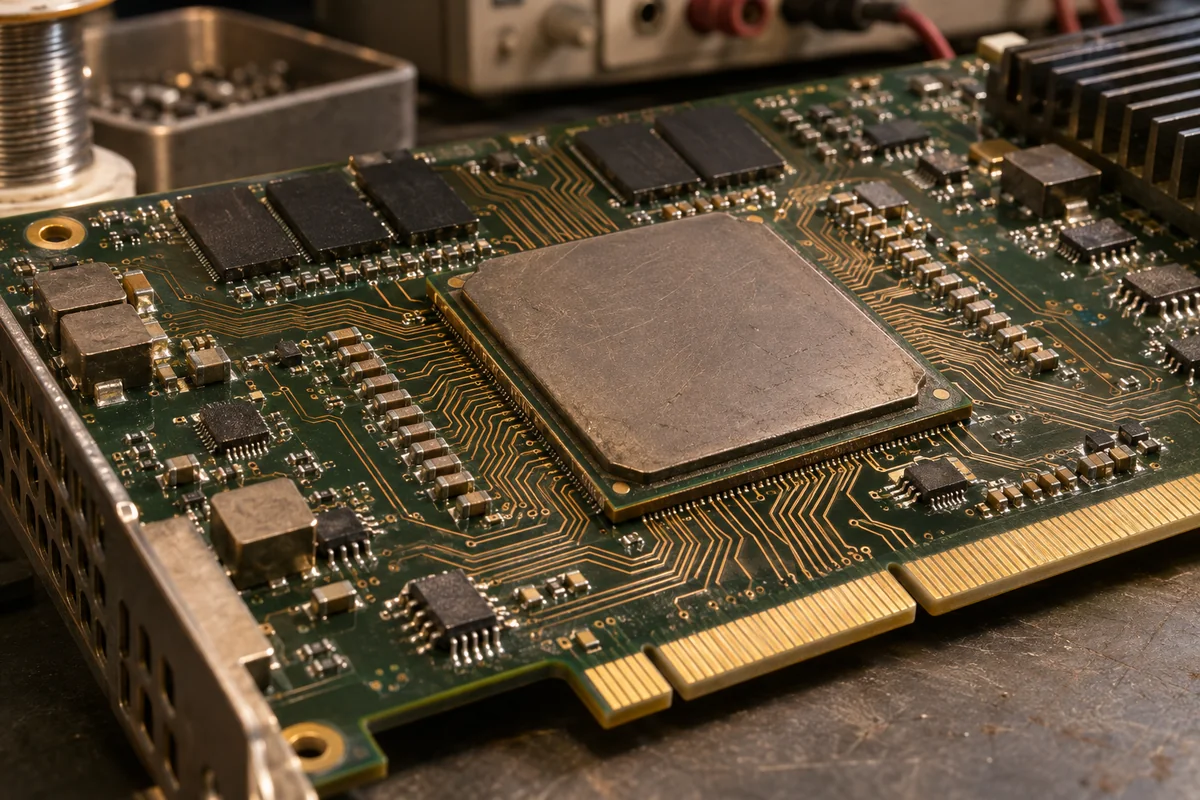

Solarflare Onload / DPDK
Polling network-interface queues directly from user space limits kernel context switches and reduces variation in packet-processing latency.
Lock-Free Ring Buffers
Single-producer, single-consumer queues use lock-free atomic operations. Alignment on 64-byte cache lines reduces false sharing between processor cores.
JAX & C++ Inference
Distributed GPU model training compiled via XLA into lightweight, highly optimized standalone C++ inference dynamic link libraries.
Apache Arrow Zero-Copy
High-density columnar tick storage enabling sub-second vectorized analytics over tens of billions of historical level-3 order events.
- Capture
- L1 / L2 / L3 · FPGA NIC bypass
- Venue protocols
- FIX 5.0 · MDP 3.0 · ITCH / OUCH
- Distributed compute
- C++23 · JAX · NVIDIA H100
Papers and preprints
Research papers
Six laboratory studies on market impact, order-book forecasting, Hawkes processes, and the hedging of physical and financial risk.
Generalization of the Square Root Market Impact Law Across 8 Asset Classes
Empirical study analyzing 14 billion exchange events validating the universality of the square-root exponent and the dimensionless scaling constant Y.
Request the paper ↗Spatio-Temporal Transformers for Order Book Forecasting: Scale Invariance vs Overfitting
Rigorous demonstration of network depth boundaries in financial time series, proposing an adapted causal regularization framework.
Request the paper ↗Coupled Stochastic Ornstein-Uhlenbeck Processes for Weather-Power Hedging
Non-linear peak power demand modeling driven by HDD/CDD temperature anomalies and optimal volumetric hedge ratio formulation.
Request the paper ↗Multivariate Hawkes Point Processes at Tick Resolution: Fast Calibration on Massive Feeds
Novel numerical optimization algorithm for calibrating mutual order book excitation matrices across 500 symbols in near real-time.
Request the paper ↗Deflated Sharpe Ratio Under Skewed and Long-Memory Financial Returns
Extension of the DSR test statistic to heavy-tailed, high-kurtosis distributions typical of systematic volatility and momentum strategies.
Request the paper ↗Term Structure Roll Yield Dynamics Conditioned on Global Storage Regimes
Econometric investigation into metals and agricultural futures relating curve slope to satellite logistics and maritime freight data.
Request the paper ↗Careers
Work at the laboratory
Physicists, quantitative researchers, and systems engineers work on the same problems, from the first hypothesis to production code. Our roles span research, execution, risk, and infrastructure.
Lead Quantitative Researcher
Formulating testable hypotheses and engineering statistical signals across equities, FX, rates, or commodities. Full research agenda autonomy.
C++23 / FPGA Systems Engineer
Engineering sub-microsecond execution engines, kernel-bypass networking (Solarflare, DPDK), and real-time binary market data feed parsers.
Machine Learning Time Series Engineer
Scaling Transformer architectures and deep reinforcement learning algorithms on GPU H100 clusters for market microstructure modeling.
Energy & Physical Derivatives Quant
Power/gas forward curve stochastic modeling, weather HDD/CDD valuation, and geospatial fundamental supply data integration.
Quantitative Risk & Model Auditor
Methodical adversarial contesting of internal strategies, out-of-sample capacity bounding, and tail risk stress-testing.
Tick Data Infrastructure Engineer
Architecting and scaling our 19 PB nanosecond tick warehouse, distributed Arrow clusters, and centralized research feature stores.
Contact
Contact the laboratory
For research partnerships, institutional execution, energy hedging, and scientific careers, contact the team working in your field.